

Do you miss backyard fires with friends and family? Are you ready to brave the frigid winter temperatures to roast marshmallows and drink hot chocolate? Maybe you just enjoy the outdoors and want to stay warm this time of year? If you have asked any of those questions, you may want to know what type of fire pit provides the most heat in winter — wood or gas? We can help answer your questions right here at Fox River Fire Rings.
Wood Fire Pit vs. Gas Fire Pit: Which Is Better in the Winter?
Whether you are planning an outdoor get together for this winter or this spring, if you want to start a fire to combat the lower temperatures, it is important to make the right choice. Homeowners have a pair of standard options when it comes to backyard fire pits — wood fire pits and gas fire pits — and it is important to know which one is the best for winter, which one provides the most heat, and which one burns the hottest.
READ MORE: How To Start a Fire in the Winter
Wood Fire Pit vs. Gas Fire Pit: Heat Output
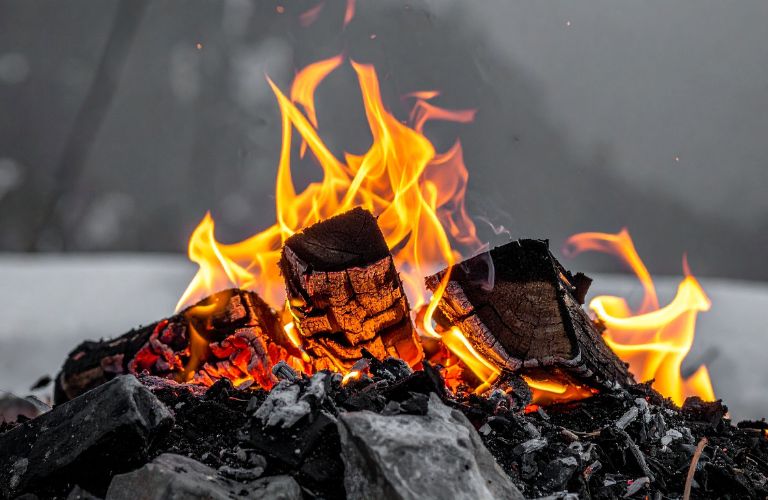
If you live up here in Wisconsin and have experienced temperatures that regularly hit negative double digits, you understand how important it is to have heat and stay warm — whether that is your furnace at home or a backyard fire pit. When it comes to staying warm around a fire pit in the colder winter and early spring months, wood heat is the way to go.
A wood fire can produce 100,000 to 200,000 BTUs (British Thermal Units) and the heat of your fire is only limited by its size and the amount of dry wood you have. By comparison — the average backyard gas fire pit is only capable of producing 30,000 to 60,000 BTUs — with some more expensive models able to produce 100,000 BTUs. If you want to stay warm this winter, a wood fire pit is the right choice.
Wood Fire Pit vs. Gas Fire Pit: Type of Heat
You may not realize it, but the type of heat produced by your fire pit matters and will impact how you feel the heat and how much it warms you. A wood fire pit produces radiant heat — which is the type of heat you feel on your face or skin and it warms what it touches. A gas fire pit produces convective heat — which warms the air around your fire pit to keep you warm. The radiant heat of wood fires and the bed of coals that the fire produces provide a steady, warm heat that lasts even after the fire has gone out.
Wood Fire Pit vs. Gas Fire Pit: Impact of Fuel and Weather
When you plan to have a fire in the winter or cooler spring months, it is important to understand how the weather and your fuel source will impact the fire. Gas fire pits — if connected to a permanent gas line — have a limitless fuel source, but the convective heat of the flames can be greatly impacted by the wind and weather, dissipating the heat. With a wood fire pit, you have fuel as long as you have wood, and the radiant heat of the flames and coals will last longer in cold weather and withstand wind better than a gas fire pit.
READ MORE: What Size Fire Ring Do You Need?
Do you want to host a fire in your backyard this winter? You may want to know what type of fire pit provides the most heat in the winter — and this overview created by Fox River Fire Rings has the answer.
Contact Fox River Fire Rings today to learn more about our durable, customizable fire rings manufactured right here in Neenah, WI!

